Chemical Treatment of Wastewater
- Home
- Chemical Treatment of Wastewater
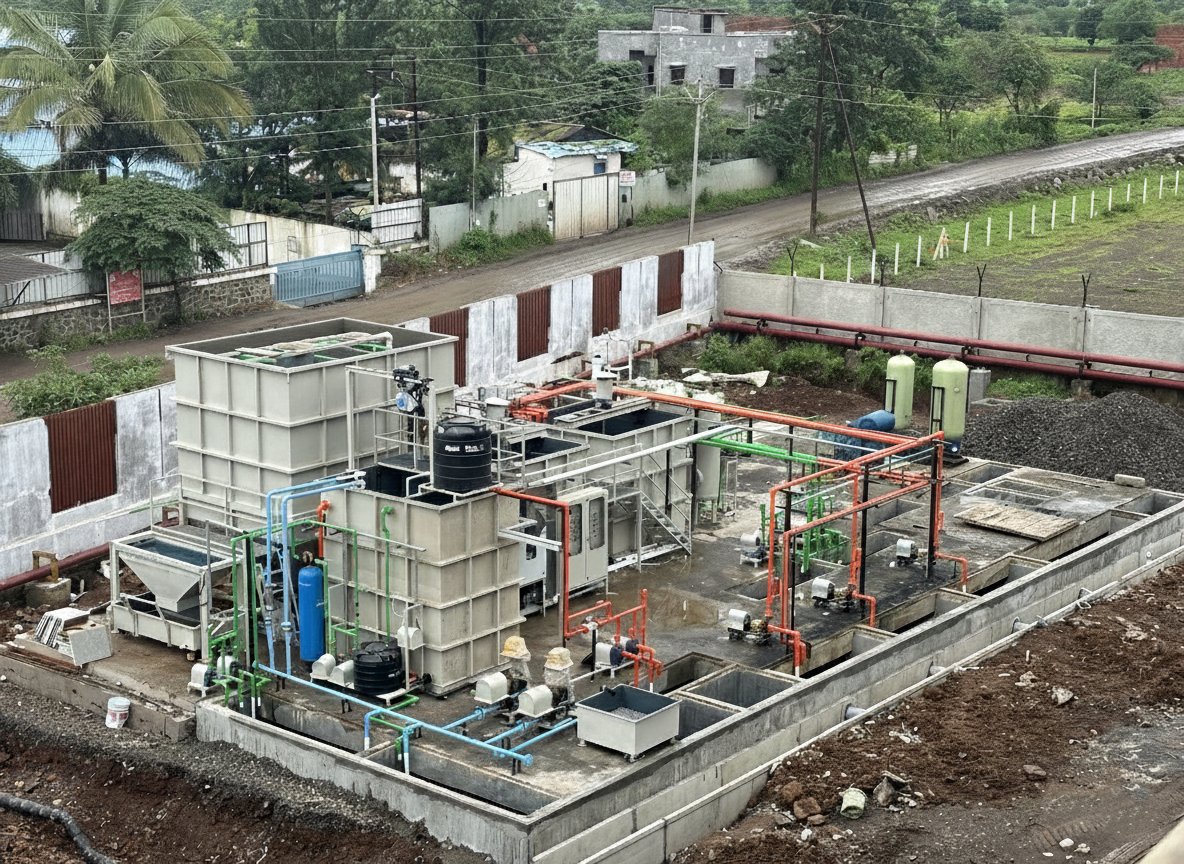
Industrial wastewater contains a wide range of contaminants, including suspended solids, heavy metals, oils, grease, organic matter, toxic chemicals, and dissolved impurities. If discharged without proper treatment, it can cause severe environmental pollution, damage aquatic ecosystems, and violate environmental regulations. Chemical Treatment of Wastewater is one of the most effective and widely used methods for removing these contaminants, making wastewater safe for discharge, reuse, or further treatment.
At Sam Enviro, we specialize in providing advanced Chemical Treatment of Wastewater solutions for industries across India. With years of experience in industrial water and wastewater treatment, we design, manufacture, supply, install, and commission customized treatment systems that deliver reliable performance while meeting CPCB and SPCB discharge norms. You can also explore our Effluent Treatment Plant (ETP) and Industrial Wastewater Treatment Plant solutions.
Our engineering team carefully evaluates wastewater characteristics, industry requirements, and regulatory standards to develop cost-effective Wastewater Chemical Treatment solutions. Whether your industry requires pH correction, coagulation, flocculation, heavy metal removal, colour removal, oil separation, or chemical oxidation, Sam Enviro offers complete turnkey solutions that improve treatment efficiency and reduce operational costs.
From pharmaceuticals and textiles to food processing, chemicals, engineering, automotive, paper, and metal finishing industries, our Chemical Wastewater Treatment systems are designed to handle complex industrial effluents while ensuring long-term reliability and environmental compliance.
Chemical Treatment of Wastewater is a wastewater treatment process that uses specially selected chemicals to remove contaminants from industrial or commercial wastewater. These chemicals react with dissolved and suspended impurities, converting them into easily removable particles through physical and chemical reactions.
Unlike purely physical treatment methods, Wastewater Chemical Treatment changes the chemical properties of pollutants, allowing harmful substances to be neutralized, precipitated, oxidized, disinfected, or coagulated before the treated water is discharged or reused.
The treatment process is commonly integrated into Effluent Treatment Plants (ETPs) and Wastewater Treatment Plants (WWTPs) to improve overall treatment efficiency and meet environmental discharge standards.
At Sam Enviro, every Chemical Treatment of Wastewater system is designed according to:
This customized approach ensures maximum treatment efficiency and long-term operational performance.
Industrial wastewater often contains pollutants that cannot be effectively removed through physical treatment alone. Chemical treatment plays a critical role in breaking down complex contaminants and preparing wastewater for biological treatment or final discharge.
Removes Suspended Solids
Fine suspended particles are difficult to remove by sedimentation alone. Chemical coagulants and flocculants combine these particles into larger flocs, making separation faster and more efficient.
Neutralizes pH
Many industrial processes generate highly acidic or alkaline wastewater. Chemical neutralization adjusts the pH to acceptable levels, protecting downstream treatment equipment and ensuring compliance with environmental regulations.
Removes Heavy Metals
Industries such as electroplating, metal finishing, mining, and chemical manufacturing often discharge wastewater containing heavy metals. Chemical precipitation converts dissolved metals into insoluble compounds that can be removed through settling and filtration.
Reduces Toxic Pollutants
Chemical oxidation helps break down hazardous organic compounds, cyanides, sulphides, and other toxic substances that are harmful to the environment.
Controls Colour and Odour
Industries like textiles, dyes, food processing, and paper manufacturing produce coloured wastewater with unpleasant odours. Chemical treatment effectively reduces colour intensity and eliminates odour-causing compounds.
Improves Biological Treatment Performance
Pre-treatment using chemicals removes substances that may inhibit biological processes, improving the efficiency of secondary treatment systems.
Supports Water Recycling
Proper Chemical Treatment of Wastewater enables industries to reuse treated water for cooling towers, gardening, flushing, washing, and various industrial applications, reducing freshwater consumption and supporting sustainable operations.
The Chemical Treatment of Wastewater process consists of several carefully controlled stages. The exact process depends on wastewater composition and treatment objectives.
Step 1 – Wastewater Collection
Industrial wastewater from different production units is collected in an equalization tank. Equalization ensures a uniform flow and consistent wastewater characteristics before treatment begins.
Step 2 – pH Adjustment
The pH of the wastewater is measured and adjusted using suitable chemicals such as lime, caustic soda, or sulphuric acid. Maintaining the correct pH is essential for effective chemical reactions during subsequent treatment stages.
Step 3 – Chemical Dosing
Specific wastewater treatment chemicals are dosed into the wastewater based on laboratory analysis and jar test results. Common chemicals include coagulants, flocculants, oxidizing agents, and neutralizing chemicals.
Step 4 – Coagulation and Flocculation
Coagulants destabilize suspended particles, while flocculants bind them together to form larger flocs. These larger particles settle more easily, improving the efficiency of the clarification process.
Step 5 – Sedimentation
The formed flocs settle at the bottom of the clarifier, producing sludge that is removed for further treatment and disposal. Clear water flows to the next stage.
Step 6 – Filtration
The clarified water passes through filtration systems such as pressure sand filters and activated carbon filters to remove any remaining suspended solids, colour, and residual impurities.
Step 7 – Final Disinfection or Polishing
Depending on the application, treated water may undergo additional polishing processes such as disinfection, activated carbon treatment, membrane filtration, or reverse osmosis before discharge or reuse.
The primary goal of Chemical Wastewater Treatment is to improve water quality while ensuring compliance with environmental regulations. Major objectives include:
These objectives help industries reduce environmental impact, protect natural water resources, and achieve sustainable wastewater management.
The effectiveness of Chemical Treatment of Wastewater depends on selecting the appropriate treatment process based on the wastewater composition and industry requirements. At Sam Enviro, we design customized treatment solutions by combining multiple chemical processes to achieve maximum contaminant removal and ensure compliance with environmental regulations.
Coagulation is the first and one of the most important stages of Wastewater Chemical Treatment. During this process, coagulants are added to destabilize suspended particles, colloids, and fine impurities that cannot settle naturally.
Common coagulants include Aluminium Sulphate (Alum), Poly Aluminium Chloride (PAC), Ferric Chloride, and Ferric Sulphate.
Flocculation follows coagulation and involves adding polymers or flocculating agents to combine small particles into larger, heavier flocs that settle rapidly in the clarifier.
Many industries generate highly acidic or alkaline wastewater that requires pH correction before further treatment. The neutralization process adjusts wastewater pH to acceptable limits by adding suitable chemicals (Lime, Caustic Soda, Sulphuric Acid, Hydrochloric Acid, Sodium Carbonate).
Chemical precipitation is widely used to remove dissolved heavy metals (Chromium, Nickel, Copper, Zinc, Lead, Cadmium, Iron) from industrial wastewater. This process is commonly used in electroplating, metal finishing, mining, and chemical industries.
Chemical oxidation converts harmful organic compounds into less toxic substances using strong oxidizing agents such as Hydrogen Peroxide, Sodium Hypochlorite, Potassium Permanganate, Ozone, and Chlorine Dioxide.
Disinfection eliminates disease-causing microorganisms before treated water is discharged or reused using Chlorination, Ozonation, UV Treatment, or Sodium Hypochlorite Dosing.
Selecting the correct chemicals is essential for achieving efficient Chemical Treatment of Wastewater:
Chemical Treatment of Wastewater is suitable for industries generating wastewater with high concentrations of suspended solids, heavy metals, colour, oils, grease, organic pollutants, and toxic chemicals:
Chemical Treatment of Wastewater is a process that uses chemicals such as coagulants, flocculants, neutralizing agents, and oxidizing agents to remove suspended solids, heavy metals, oils, colour, and other contaminants from industrial wastewater before discharge or reuse.
Industries such as pharmaceuticals, textiles, chemicals, food processing, dairy, electroplating, automobile, paper, engineering, metal finishing, and power plants commonly use Chemical Treatment of Wastewater to meet environmental discharge standards.
Common wastewater treatment chemicals include Poly Aluminium Chloride (PAC), Alum, Ferric Chloride, Lime, Caustic Soda, Sulphuric Acid, Hydrogen Peroxide, Sodium Hypochlorite, and polymer-based flocculants. The selection depends on wastewater characteristics and treatment objectives.
Yes. After proper Chemical Treatment of Wastewater and additional polishing processes, treated water can often be reused for cooling towers, boiler feed (after suitable treatment), gardening, flushing, washing, and various industrial applications, reducing freshwater consumption.
Sam Enviro provides customized wastewater treatment solutions, advanced process design, premium-quality equipment, complete turnkey project execution, installation, commissioning, AMC services, and reliable after-sales support to help industries achieve efficient and compliant wastewater treatment.
If you are looking for efficient and reliable Chemical Treatment of Wastewater solutions, Sam Enviro is your trusted partner. Contact Sam Enviro today to discuss your project requirements.